What NextGen does
Governed AI, and the operating discipline underneath it
I founded NextGen Consulting in 2006. For most of those years the work was modernisation: tax, licensing, regulatory and public-service systems for federal, state and local agencies. Large programmes, many stakeholders, long timelines — the kind where the technology is rarely the hard part.
The hard part is always the same. Fragmented ownership. Approvals that nobody is accountable for. A plan that everyone agrees with and no one is executing. Programmes don't usually collapse; they stall, quietly, while everyone involved is working hard.
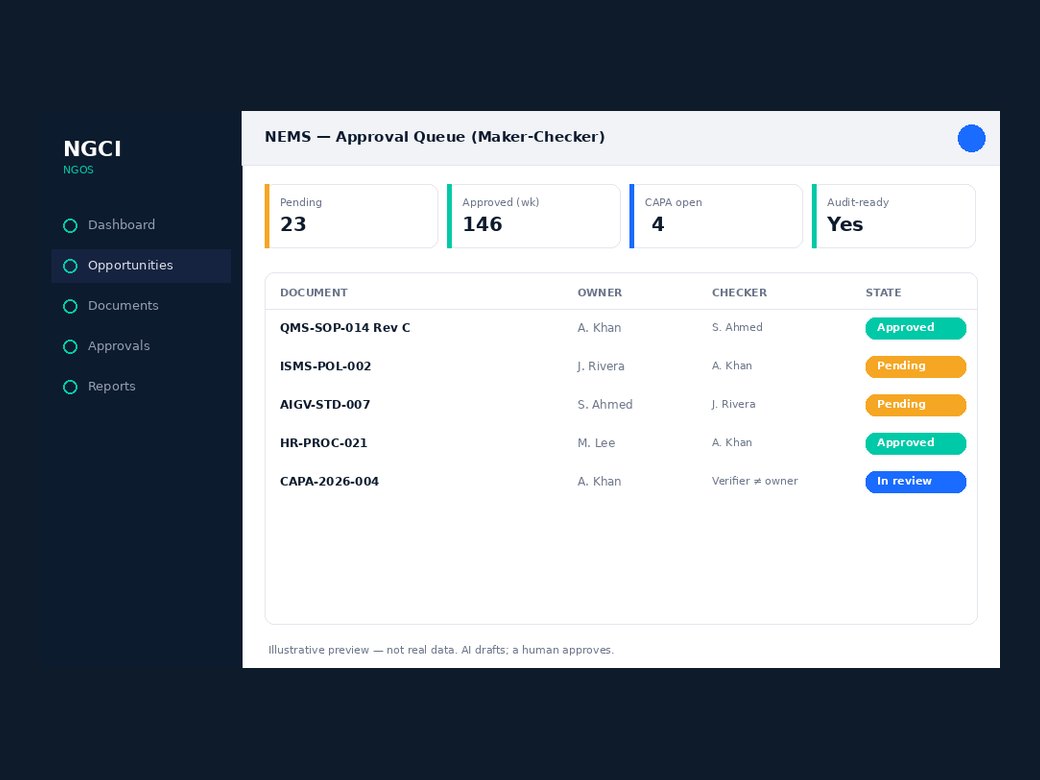
What we build now is a response to that. NGOS is the system the firm runs itself on — capture, proposal, staffing, compliance, delivery — with AI drafting throughout and a human approving anything that matters. NEMS is the governance layer around it: controlled documents, maker-checker approval, risk, audit, corrective action.
The design principle is narrow and I'd defend it anywhere: the rules that matter belong in the database, not in application code. Code can be changed by a well-meaning engineer on a deadline. A constraint cannot. No one approves their own work. Nothing is released that wasn't cleared. Every action leaves a record of who took it.
We built it for ourselves before we offered it to anyone else. Five hundred–odd controlled documents and the whole of our own operation run on it. That isn't a marketing position — it's the only honest way to sell an operating discipline.