Press & Media
Media kit.
Everything a journalist, podcast host, or event organizer needs — ready-to-use bios, headshots, quick facts, and speaking topics. For interviews and bookings, get in touch.
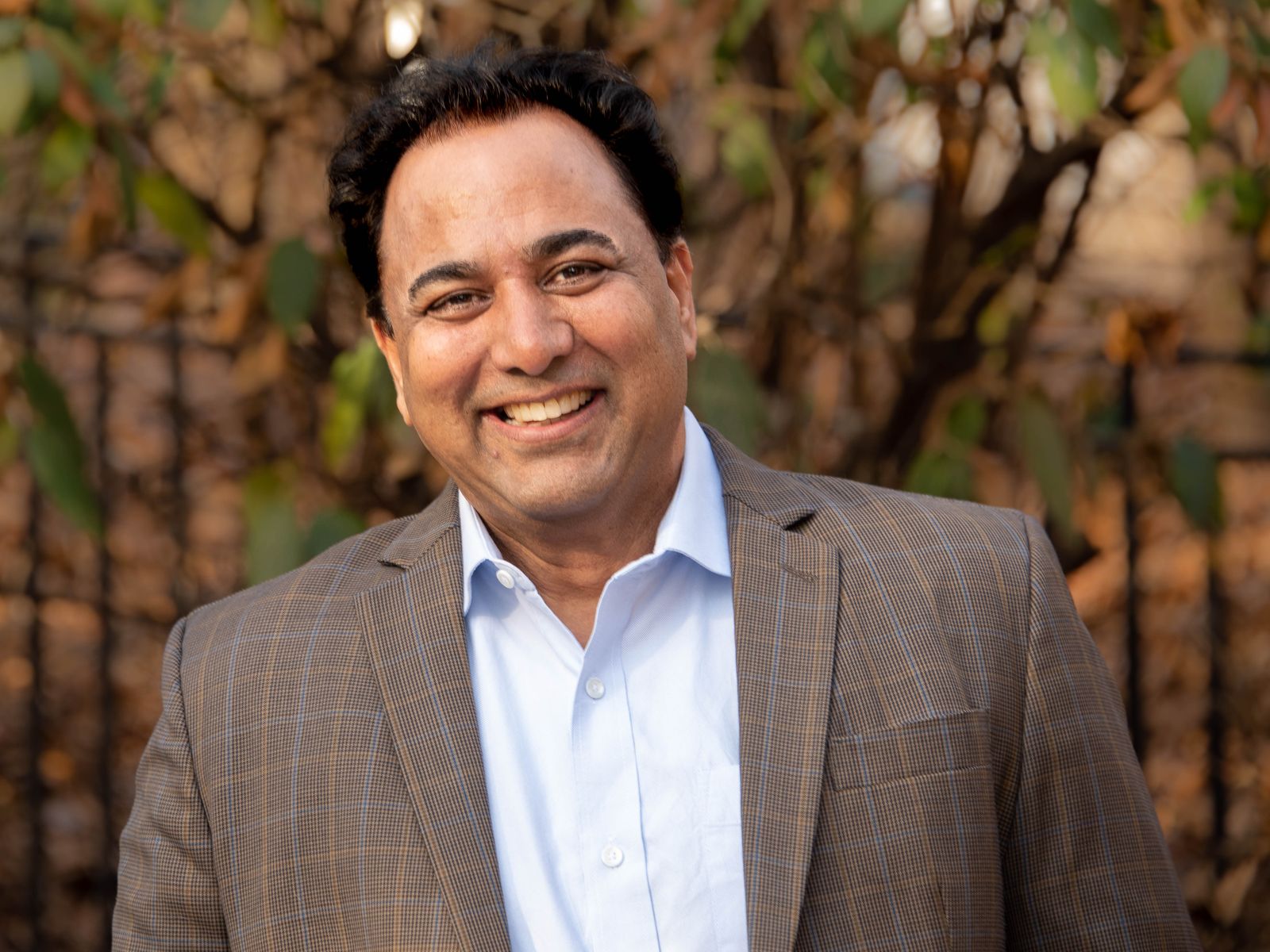
Everything a journalist, podcast host, or event organizer needs — ready-to-use bios, headshots, quick facts, and speaking topics. For interviews and bookings, get in touch.
Saif Rehman is a technology executive and writer whose work explores the intersection of institutions, data, and public life. He lives in Ellicott City, Maryland, with his wife and three children. The Continuity System is his first novel.
Saif Rehman is a strategist and business leader based in Ellicott City, Maryland, where he lives with his wife and three children. He has spent his career on how large organizations actually get things done — and on the gap between how institutions are supposed to work and how they do. The Continuity System is his first novel. He is at work on the next.
Saif Rehman lives in Ellicott City, Maryland, with his wife and three children. The Continuity System is his first novel.
Please credit photos as "Courtesy of Saif Rehman." For high-resolution versions and the print-resolution cover file, email books@saifrehman.org.
Copy below is identical to the retailer listings and the printed back cover. Please use it verbatim.

A quiet strategist helps an exhausted American democracy trade uncertainty for competence — and no one can prove anything wrong ever happened.
No spies were caught. No laws were broken. Nothing, on any given evening, looked like anything at all. At a rain-streaked country-club fundraiser in the Maryland suburbs, a quiet man named Li Zhao watches a room full of Americans announce their vulnerabilities as small talk. He is not there to steal secrets. He is there to do something far more patient: to help. To organize. To make things work. Around him gather the people who will carry the next decade — Emily Chen, a young policy fellow who senses something she cannot name; Ethan Park, a data prodigy who has finally found a room that rewards competence; Mei Lin, who teaches frightened newcomers that they belong; and Daniel Mercer, the federal investigator who slowly realizes he is watching an operation that has never needed to hide. The Continuity System is a slow-burn literary thriller about the quietest takeover American democracy ever agreed to — built not on deception, but on everything we freely gave away. The frightening part is not that it could happen. It is that we might choose it.
Over forty years, a country changes hands. Not by invasion, not by fraud, and not in any single moment anyone can later point to. It begins in one Maryland county with a man who is very good at helping. Li Zhao arrives with no cover story worth exposing and no secret worth stealing. He builds something that works: volunteers who show up, data that is accurate, meetings that start on time, neighbors who are trained and paid attention to and made to feel that they belong. The organization he seeds outlasts him. The people it produces run for office and win, on merit, with real constituencies who genuinely prefer them. Daniel Mercer, the federal investigator assigned to the file, spends a decade trying to name a crime. He never finds one. What he finds instead is a country that has been offered competence in exchange for uncertainty and has, election by election, freely accepted the trade. The Continuity System follows four generations of the people inside that trade — the strategist, the true believers, the technicians, the investigator who cannot prove what he can see — from a rented ballroom in 2027 to a constitutional settlement no one is willing to call a coup because, by every rule anyone wrote down, it isn't one. A slow-burn literary thriller about influence without infiltration, and the difference between a system that is captured and a system that is simply, permanently, better run than the alternative.
Comparable titles: The Candy House, The Ministry for the Future, Exit West, and the novels of Robert Harris. Please do not describe it as a spy or espionage novel. The counties, districts, and organizations in the novel are invented.
Two decades of lessons from NextGen Consulting on modernizing operations, durable client relationships, and why fundamentals beat fashion.
What building organizations and participating in civic life taught him about how competent systems quietly accumulate power — the question at the center of The Continuity System.
How communities around the world solve the same human problems — and what American towns can borrow from the best of them.
The questions behind The Continuity System: what happens when exhausted voters would trade the mess of democracy for systems that simply work?